



Report Highlights: The travel and tourism industry exceeded pre-COVID-19 global gross domestic product (GDP) for the second consecutive year, bringing in $11.7 trillion in 2025. It is projected to reach $16.5 trillion by 2035, suggesting continued growth for the sector.
- The travel and tourism sector’s global GDP grew from $10.9 trillion in 2024 to $11.7 trillion in 2025, an $800 billion year-on-year increase.
- The travel and tourism sector’s global GDP is projected to grow to $16.5 trillion by 2035, accounting for 11.5% of total global GDP.
- Jobs in the travel and tourism sector have grown by 10% post-Covid-19, resulting in 371 million jobs globally in 2025.
- International tourist arrivals exceeded pre-COVID-19 levels of 1.46 billion in 2019 for the first time, reaching 1.52 billion tourist arrivals in 2025.
- The online travel market was worth $701.85 billion in 2025, a 7.4% year-on-year increase from $653.64 billion in 2024.
- The online travel market is expected to be worth $1.057 trillion by 2030.
- In 2025, 62% of global travellers used AI tools for trip planning.
Tourism is the act of travelling within your own country or to an international destination for business or pleasure. It has become a major source of income for many countries, especially those with young or developing economies.
In this research guide, we’ve compiled key statistics to show the importance of tourism and the opportunities it offers. From global GDP contribution to the growing travel market types, you’ll find everything you need to know here.
Breakdown of the Key Travel and Tourism Statistics
Here is a breakdown of key statistics on the travel and tourism industry, highlighting its importance in the global economy.
Global Travel and Tourism Total Contributions to GDP
Total contributions to global GDP have increased significantly post-COVID-19, and predictions suggest it will continue to grow.
- The global GDP contribution from travel and tourism increased by 7.3% from $10.9 trillion in 2024 to $11.7 trillion in 2025.
- Travel and tourism’s GDP contributions are expected to grow by 41% to $16.5 trillion by 2035.
- The share of travel of tourism’s global GDP contribution was 10.3% in 2025, which is expected to grow to 11.5% by 2035.

Bar graph showing the Global GDP contribution of travel and tourism
Countries With the Highest Contributions to the Global GDP in 2025
- The USA: $2.5 trillion
- China: $1.9 trillion
- Germany: $541.9 billion
- The UK: $383.1 billion
- Japan: $323.3 billion
Countries With the Highest GDP Share for Their Economy in 2025
- Macau: 88.8%
- Antigua and Barbuda: 84.1%
- Grenada: 67.9%
- Aruba: 67.1%
- The Maldives: 63.9%
Global Travel and Tourism Total Contributions to Employment
The impact of travel and tourism also plays a significant role in the job market.
- Travel and tourism contributed to 371 million jobs globally in 2025.
- The travel and tourism industry’s contribution to the job market is predicted to increase by 24.4% to 461.6 million jobs by 2035.
Countries Leading the Way for Travel Job Contributions in 2025
- China: 83.36 million
- India: 48.16 million
- The USA: 20.6 million
- Indonesia: 13.68 million
- Philippines: 11.67 million
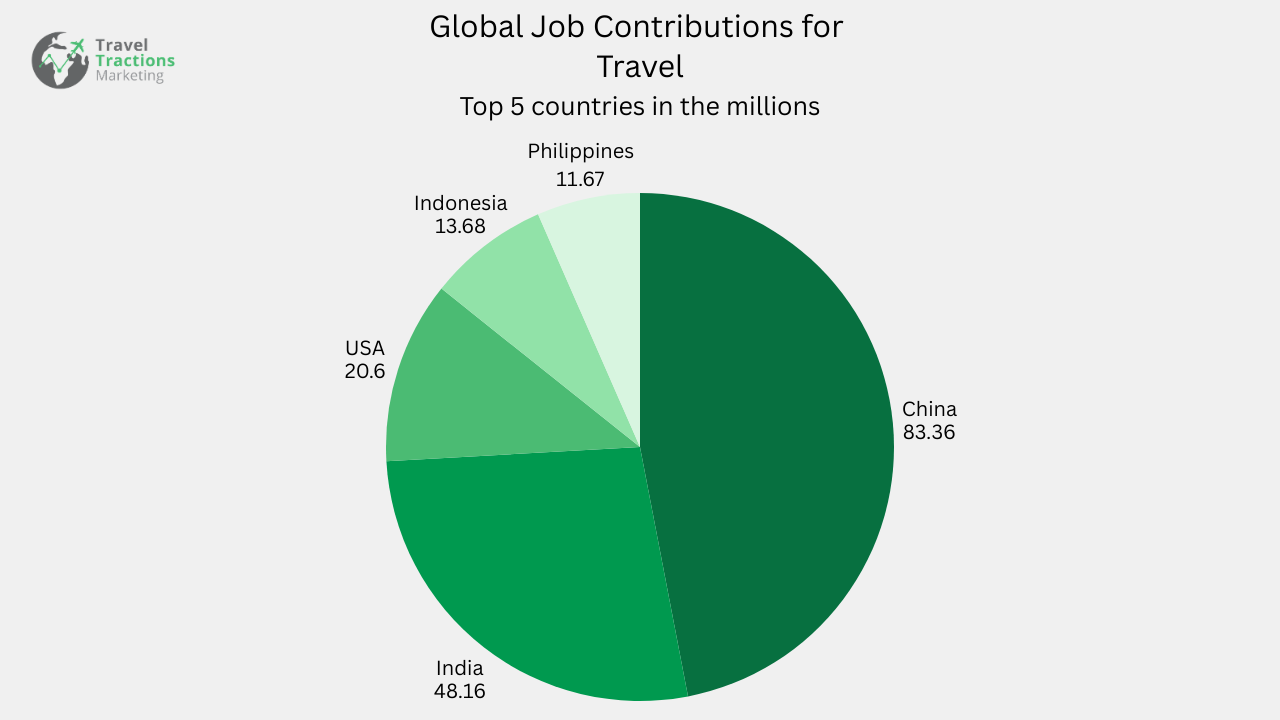
A pie chart showing the top global job contributions for travel and tourism
Global International Tourist Arrivals
The travel and tourism industry has also seen great improvements in tourist arrivals post-COVID-19.
- International tourist arrivals grew by 4% from 1.46 billion in 2024 to 1.52 billion in 2025.
- Q2 (April, May, and June) saw a 5.2% increase in international arrivals, the highest quarter percentage for 2025.
Regions With the Most International Tourist Arrivals in 2025
- Europe: 793.5 million
- Asia and the Pacific: 330.7 million
- Americas: 218.1 million
- Middle East: 99.8 million
- Africa: 81.3 million
Regions % Change in International Arrivals for 2025
- Europe: +6% from 2019 and +4% from 2024
- Asia and the Pacific: -9% from 2019 and +6% from 2024
- Americas: -1% from 2019 and +1% from 2024
- Middle East: +39% from 2019 and +3% from 2024
- Africa: +17% from 2019 and +8% from 2024

Bar graph and pie chart of International arrival statistics
Online Travel Market Growth and Statistics
The online travel market has also seen significant growth in 2025.
- The online travel market grew 7.4% year-on-year from $653.64 billion in 2024 to $701.85 billion in 2025.
- The online travel market is projected to grow by 9.5% to $768.9 billion in 2026.
- It is also projected that the online travel market will grow by 50.6% to $1.057 trillion by 2030.
Online Travel Companies’ Revenue Cap for 2025
Five online travel companies accounted for 50.2% of the total online travel market value, totalling $352.63 billion.
- Booking Holdings: $162.71 billion
- Airbnb: $73.98 billion
- Trip.com: $48.8 billion
- Amadeus IT Group: $35.09 billion
- Expedia Group: $32.42 billion

Bar graph of the top 5 online tourism companies by revenue cap
Revenue Share of Sales Channels for Travel and Tourism
Post-COVID-19, the travel and tourism industry has seen significant changes in sales channels.
- 71.13% of revenue sales came from online channels in 2025, while 28.87% came from offline channels.
- There has been a 8.14% increase in online sales from 62.99% in 2019 to 71.13% in 2025.
- Revenue from online sales channels is expected to grow by a further 4.09% by 2029.
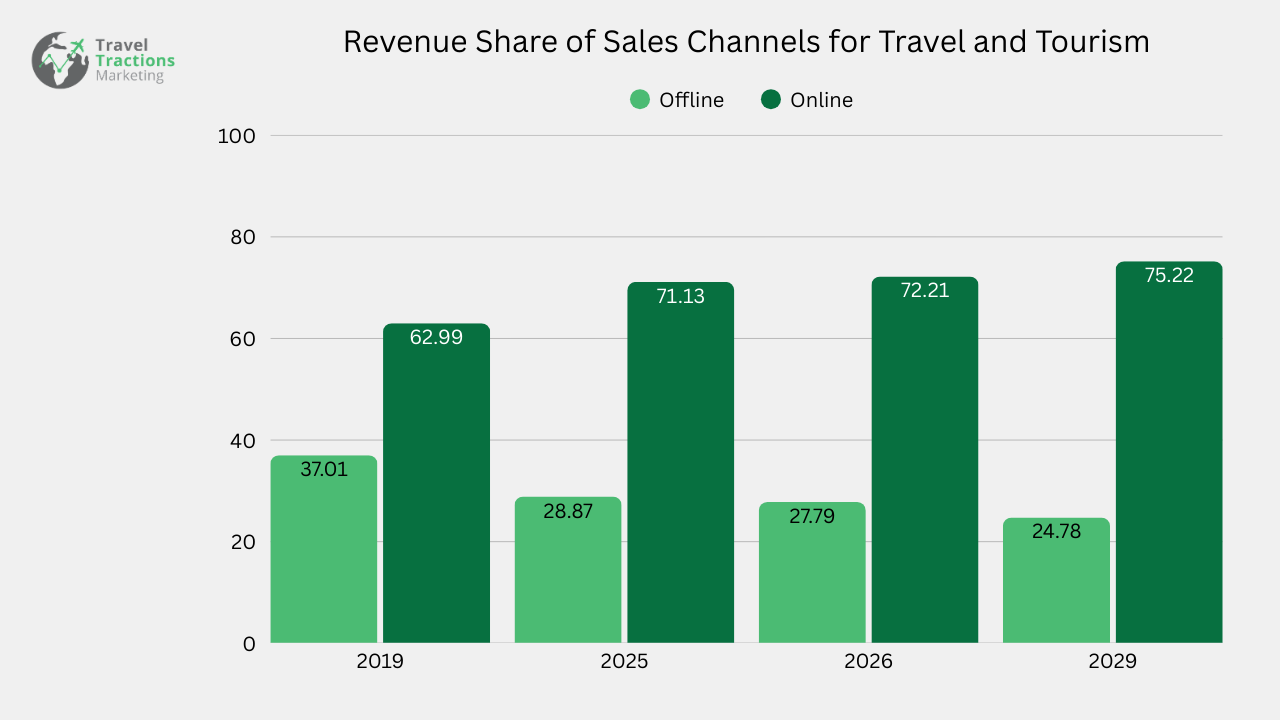
Bar graph of the revenue share of sales channels for travel and tourism
AI Trends for Travel and Tourism
The rapid growth of AI tools has also had a big impact on the travel and tourism sector, including how travellers plan their trips.
- 62% of worldwide travellers used AI tools for trip planning in 2025.
- 89% of worldwide travellers said they would use AI tools at every stage of their journey in 2025.
Regional Statistics for the Use of AI in Travel and Tourism
- 74% of Latin American and Asia Pacific travellers used AI tools for trip planning in 2025, the highest percentage of all global travellers
- 98% of Latin American travellers said they would use AI tools at every stage of their journey in 2025, the highest percentage of all global travellers.
- 49% of North American travellers used AI tools for trip planning in 2025, the lowest among worldwide audiences.
- 81% of North American travellers said they would use AI tools at every stage of their journey in 2025, the lowest among worldwide audiences.
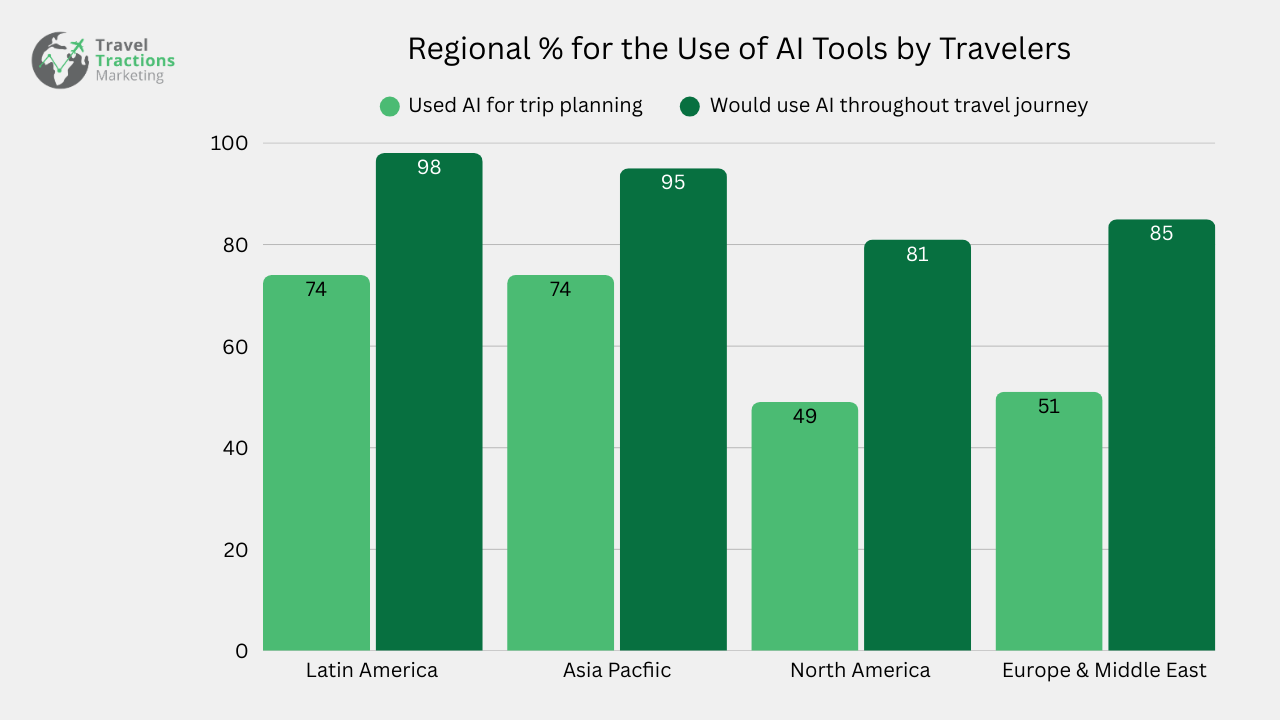
Bar graph of the regional % of travellers who use AI tools
Travel Experiences Market Size Worldwide
Travellers are also actively seeking unique experiences to make their trips more worthwhile, as evidenced by the jump in market value.
- 40% increase in the travel experience market size from $251 billion in 2019 to $352 billion in 2025.
- It is expected to grow by 42%, with the market size reaching $502 billion by 2029.
Leading Experiences Among Travellers From 2025
- Spa Services: 34% traveller votes
- Gourmet Dining/Wine Tasting: 29% traveller votes
- Live Music Performances: 25% traveller votes
- Adventure Activities & Equipment: 24% traveller votes
- Cultural Cooking Classes: 18% traveller votes
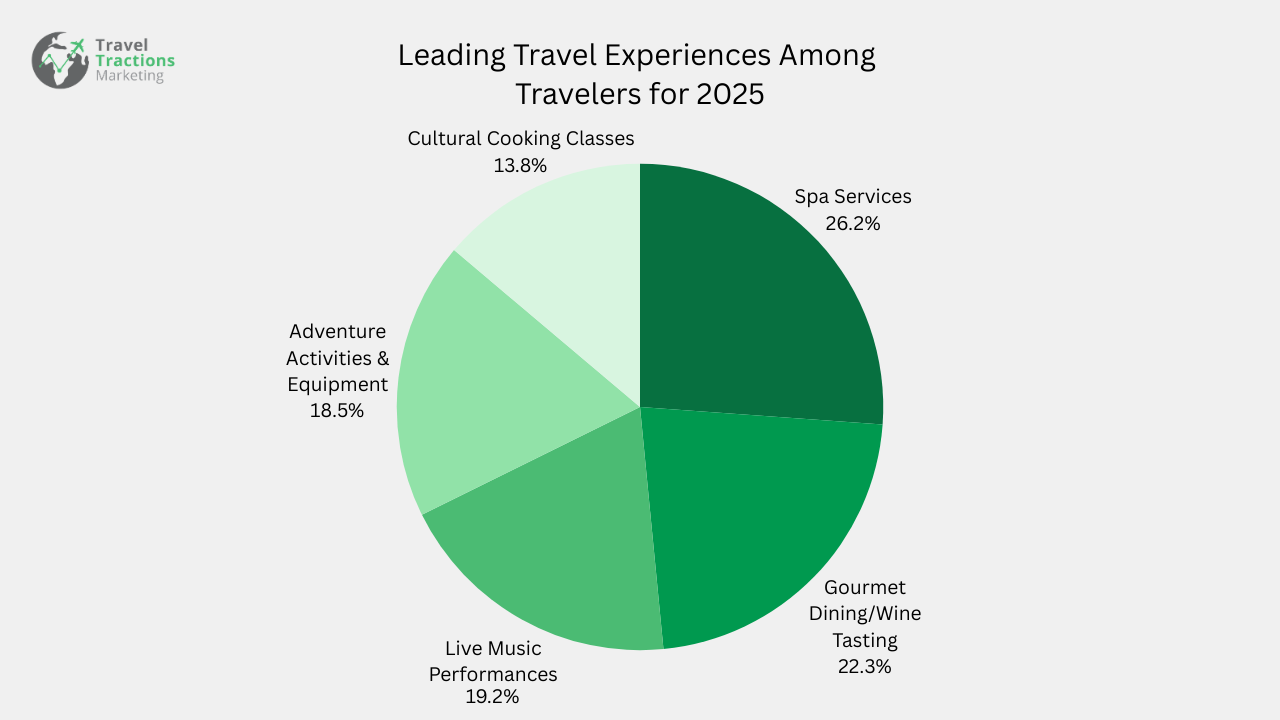
Pie chart of the leading travel experiences among travellers
Different Tourism Types and Their Importance in Economic Development
As the above statistics suggest, the travel and tourism industry has only just begun to recover post-COVID-19. The research also shows there is plenty of opportunity within the sector.
If you are interested in the economic benefits of travel or want to discover which tourism type your travel brand fits, then keep reading.
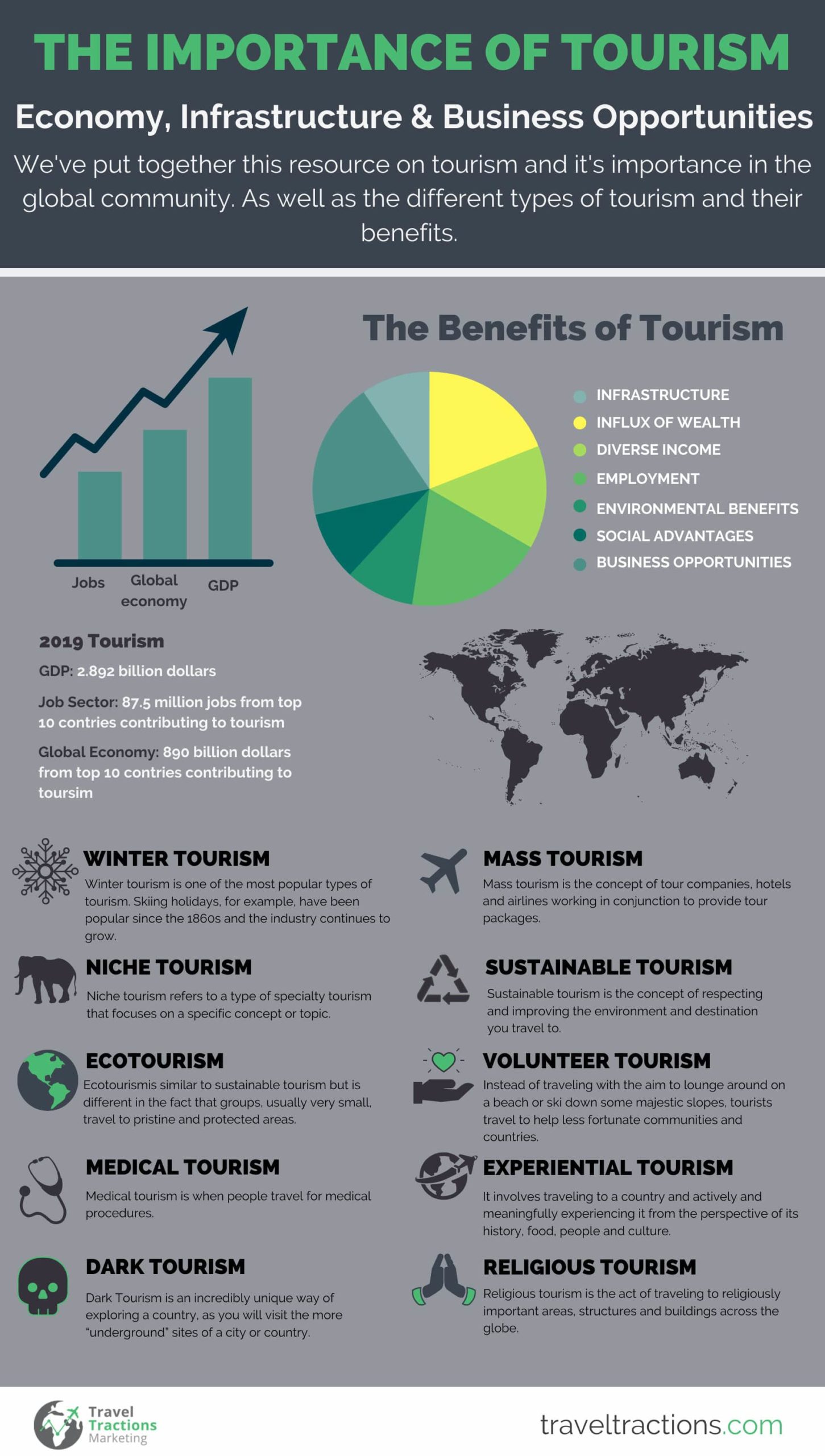 Infographic explaining the different types of tourism
Winter Tourism
Winter tourism is one of the most popular types of tourism. Skiing holidays, for example, have been popular since the 1860s, and the industry continues to grow.
Many countries that are hubs of winter tourism are in Europe and North America, but Asia is quickly emerging as a go-to winter destination.
- This past winter season (December 2025 – February 2026) saw a 30% year-on-year increase in travel interest.
Some key tourist destinations that saw big increases in travel interest during this period include:
- South Korea: +226%
- China: +105%
- Kazakhstan: +68%
- Austria: +82%
- Germany: +43%
- Finland: +33%

Pie chart showing the % increase in winter travel destination interest
Mass Tourism
Mass tourism is the concept of tour companies, hotels, and airlines working together to provide tour packages. This type of tourism lets you book your flights, a place to stay, and all the extras in one go with one payment.
This form of tourism has become incredibly popular, as seen in the increase in revenue from the travel app industry over the last few years.
- Travel app revenue peaked at $694 million in 2019 and has grown by 130% to $1.6 billion in 2025.
- The travel app industry (a significant contributor to mass tourism) is expected to grow by 40% to $2.25 billion in 2029.

Line graph of the travel app industry market value
Niche Tourism
Niche tourism refers to a type of speciality tourism that focuses on a specific concept or topic. Some of the most popular niche travel types include:
Sports Tourism
- Sports tourism accounted for 10% of global tourism expenditure in 2025.
- It is also the fastest-growing segment of the global travel industry, with a 28% growth rate post-COVID-19.
- Sports tourism is projected to grow at an annual rate of 17.5% through 2030, making it an attractive niche to target.
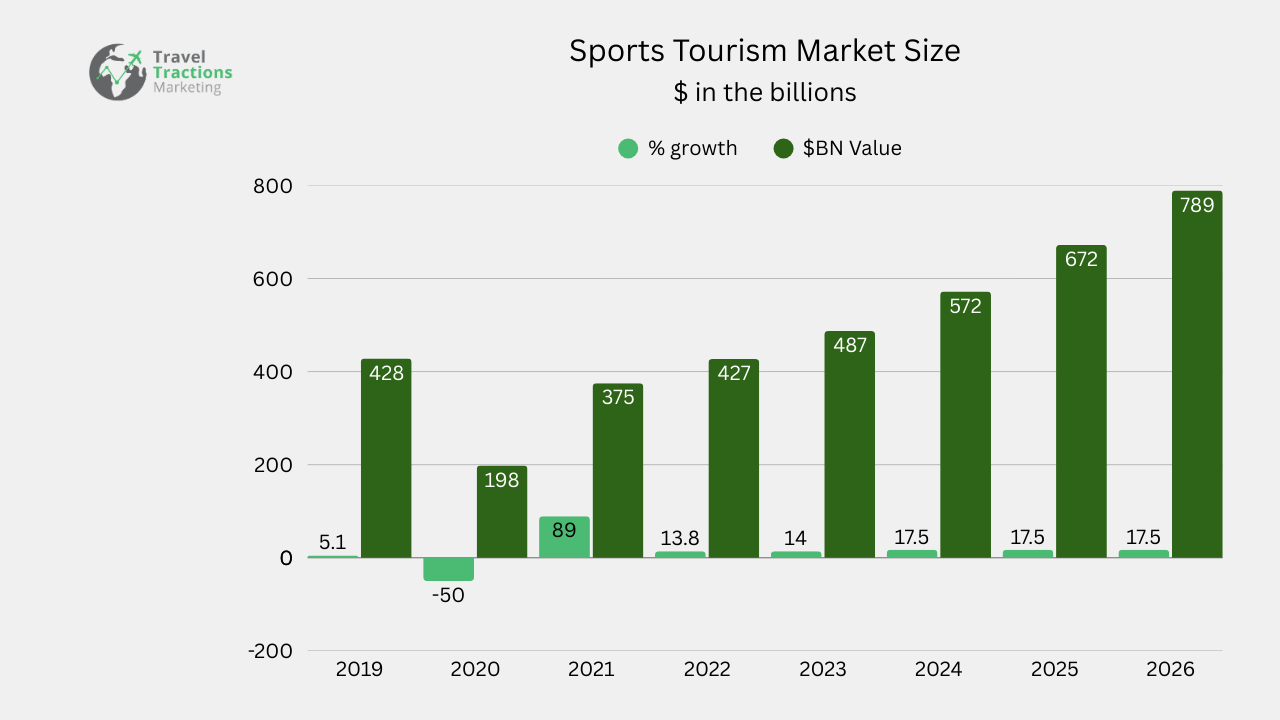
Bar graph showing the market value growth for sports tourism
Sustainable Tourism
Sustainable tourism is the concept of respecting and improving the environment of the destination you travel to. This includes maintaining the cultural heritage and dignity of the people as well as their ecological environment and biodiversity.
- Sustainable tourism has seen significant growth post-COVID-19, with 84% of global travellers in 2025 believing sustainable travel is important.
Ecotourism
Ecotourism is similar to sustainable tourism practices, but differs in that groups, usually very small, travel to pristine, protected areas. These tours focus on being low-impact and aim to leave the smallest carbon footprint on the area.
- Ecotourism has seen significant growth post-COVID-19, with the market value estimated to reach $320 billion in 2026.
- It’s also predicted that this travel niche will grow by 15.4% annually, reaching a market value of $568 billion by 2030.
Volunteer Tourism
Volunteer tourism is exactly what the name suggests. Instead of travelling for leisure, tourists travel to help less fortunate communities and countries.
“Voluntourism” has been criticised recently as an expression of a white saviour complex, and it definitely can be damaging. But thankfully, well-run volunteer tourism also has some definite benefits. These include an influx of finance that would otherwise not have been directed to that community, as well as improved cross-cultural understanding.
- The projected market value for volunteer tourism is $5.6 billion in 2026.
- This is expected to grow by 10.7% to $9.4 billion by 2033.
Medical Tourism
Medical tourism is when people travel for medical procedures. In many countries, surgeries and procedures are expensive or require you to join an extended waiting list. This is why residents will travel to have these procedures performed abroad. Currently, the largest market is the Asia Pacific, but Latin America is the fastest-growing.
- The medical tourism market size was $76.1 billion in 2025.
- This travel niche is projected to grow to $84.5 billion in 2026.
- It is also expected that the market size will see annual growth of 8.4%, reaching an estimated $174.1 billion by 2035.

Line graph showing the market size growth for medical tourism
Experiential Tourism
Experiential tourism is a fairly new concept and can also be called “Immersion Tourism”. It involves travelling to a country to actively and meaningfully experience its history, food, people, and local culture.
Experiential tourism can be broken down into several sectors, including health and healing, seasonal wildlife experiences, and culinary guided journeys.
- The luxury experiential tourism industry is highly regarded, with 84% of travellers believing trusted travel advisors are more valuable than unlimited search.
Dark Tourism
Dark Tourism is an incredibly unique way to explore a country, as you visit the more “underground” sites of a city or country. These include battlegrounds, scenes of horrific and famous crimes, or areas where mass genocide occurred.
- Dark tourism had a global market size of $33.54 billion in 2025.
- It is projected to grow by 2.9% annually until 2030.
Doom Tourism
Doom Tourism, or “Last Chance Tourism”, is a concept that involves travelling to ecological areas of the world that are near destruction. Places such as the Great Barrier Reef are under threat, and more and more people want to see them before they disappear.
The effects of this type of tourism are both positive and negative. The upside is that it consistently raises awareness of the plight of these areas. But the negative side is that the influx of visitors and the carbon footprint they leave exacerbate the problem.
Religious Tourism
Religious tourism is the act of travelling to religiously significant areas, structures, and buildings worldwide. Many believers across religions take part in religious tourism, as it helps strengthen their faith.
- Religious tourism is a booming niche, with a market size of $190.5 billion in 2025.
- It is projected that religious tourism will grow annually by 8.4% until 2030.
- It is predicted that religious tourism will reach a market value of $286.1 billion by 2030.
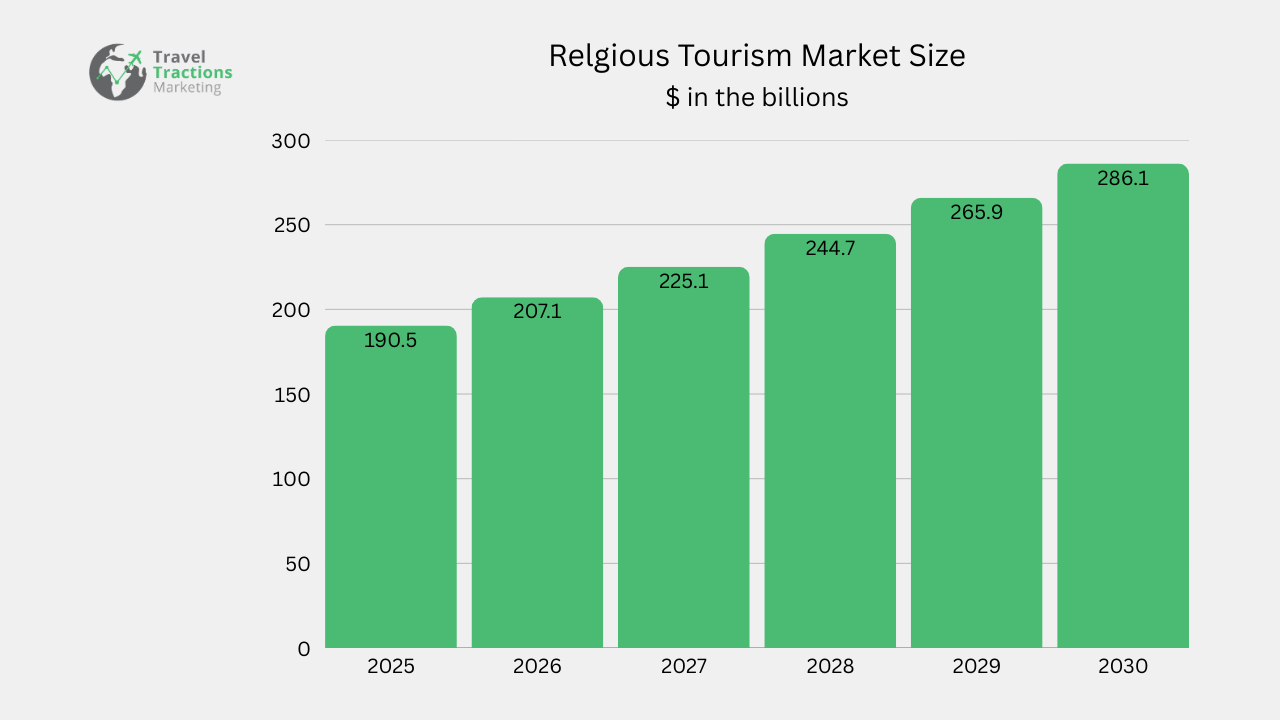
Bar graph showing the market size growth for religious tourism
What Are the Benefits of Tourism?
Tourism has always been a booming sector across the globe. No matter where you live, there will always be a group of people, big or small, who want to visit your home country. Therefore, tourism is essential for a country’s economic growth and global standing.
Here are some of the most influential factors that make tourism important.
1. Influx of Wealth
The biggest advantage of tourism is the influx of money into a country’s economy. This is especially important in countries with developing economies. For instance, many countries in Africa, Asia, the Pacific, and the Caribbean rely heavily on the travel industry.
Tourists from “first-world” countries bring in cash that is stronger than the local currency and are therefore willing to spend more of it. This offers many advantages, as it supports local businesses such as hotels, tour operators, vendors, transportation providers, and restaurants.
2. Diverse Income
Many countries rely heavily on a few industries, and their economies suffer when these sectors become strained. Tourism provides a reliable source of income for a country that can ease the strain on struggling local industries (except during crises, such as COVID-19 or civil unrest).
This is almost a safety net for countries and offers massive economic benefits to developing nations.
3. Employment
Jobs are possibly the most obvious advantage of tourism in any country. This extends from the pilots who bring tourists to the waitresses at restaurants, who see a rise in customers during peak tourist season.
Tourism also creates many new jobs, as local people start their own businesses in the tourist industry and hire locally. The secondary effects aren’t as obvious, but local produce growers, for example, benefit due to the increased need for what they grow or sell.
4. Infrastructure
One of the most important benefits of tourism is the construction and improvement of local infrastructure. Increased spending helps local communities improve the condition of their roads, parks, community areas, schools, and hospitals.
The tourism industry will struggle to operate smoothly in any country without adequate infrastructure. For example, it is difficult for produce to reach restaurants if the roads are severely damaged or undrivable.
5. Social Advantages
The importance of the tourism industry extends to social advantages as well. Tourism creates a source of pride for local communities and their traditions. Tourists want to experience the “real” side of a country, and that allows locals to showcase their traditions and keep them alive in an ever-changing world.
This extends to local heritage sites and buildings, which become hubs for tourists exploring the country. And that, in turn, keeps the sites from being destroyed, thereby securing the local community’s traditions.
6. Environmental Benefits
Most of the world is trying to turn the corner toward greater environmental friendliness, and this has spread into the travel industry. Sustainability is now a must for many travellers. This is encouraging tour operators and businesses in the industry to differentiate themselves by becoming much more environmentally aware.
These businesses support local environments by adding an environmental twist to their packages, which then helps protect these areas.
7. Business Opportunities
Tourism, especially in developing economies, enables entrepreneurs to launch new businesses and products. These opportunities would usually not be viable if they relied solely on local communities.
The money that tourists bring in allows businesses to grow quickly, especially if they offer a unique service or products that fulfil a tourist’s needs.
Final Thoughts on the Importance of the Tourism Industry
There are so many different kinds of tourism. Some are emerging in an increasingly environmentally-conscious world, while others have been around for centuries.
While tourism can have a negative impact, its positive impact on local economies and people is immeasurable. So many opportunities and developments depend on this global industry.
The coronavirus had a terrible impact on tourism. But the industry’s rapid growth post-COVID-19 and its vital role in many countries’ economies attests to the fact that travel and tourism will continue, strong as ever.

Matt is a travel entrepreneur with over a decade of experience across digital marketing, operations, and asset investment. His ventures include founding the agency Travel Tractions, successfully buying and selling multiple travel websites, and owning a boutique hotel in his home base of Cape Town. His writing focuses on the intersection of data-driven marketing and real-world business growth in the tourism sector.